Plenary speakers
Plenary Talk 1:
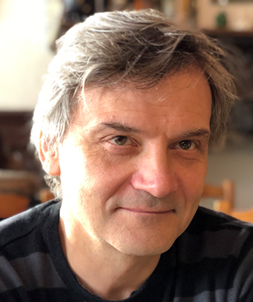
Oleg Dubovik
CNRS, University of Lille
Title: Explorations of novel satellite observations and their synergy for advanced aerosol characterization
Abstract:
This presentation discusses the exploration of novel observations from recently launched satellite instruments and their synergies. First, it aims to demonstrate the enhanced value of information regarding columnar aerosol properties derived from the advanced capabilities of Multi-Angle Polarimeters (MAPs). MAP measurements are widely considered the most suitable passive satellite observations for monitoring atmospheric aerosols. They offer enhanced sensitivity not only to aerosol abundance but also to aerosol absorption, particle type, morphology, and shape. Although the use of polarimetry was previously limited by data scarcity and interpretive complexity, numerous space polarimeters are currently being deployed or planned for the coming years. These include the European 3MI/EPS-SG and MAP/CO2M, the US PACE, MAIA, and AOS, and the Chinese DPC and PCF missions (Dubovik et al., 2019). Consequently, the significance of multi-angular polarimetry for atmospheric monitoring is expected to increase rapidly. The high potential value of these products will be illustrated using enhanced aerosol data obtained from MAP observations via the state-of-the-art GRASP algorithm (Dubovik et al., 2021).
Furthermore, the presentation will explore the synergies between different types of currently available satellite observations. Specifically, we will discuss the potential of synergistic retrievals combining: (i) passive Geostationary (GEO) and Low Earth Orbit (LEO) multi-platform observations, and (ii) passive and active satellite measurements. Implementing synergistic retrievals from multiple instruments is an efficient strategy to compensate for the individual weaknesses of different space-borne sensors. For example, while lidar observations are highly sensitive to the vertical variability of atmospheric aerosols, their interpretation typically relies on additional information regarding aerosol type. Conversely, MAP measurements are highly sensitive to aerosol type—which exhibits limited vertical variability—making MAP and lidar observations highly complementary and well-suited for synergistic retrieval. Additionally, combining high-frequency GEO observations with LEO measurements, which generally possess higher information content, is also highly promising. Finally, we will present and discuss multi-platform satellite retrievals utilizing passive observations from the Copernicus Sentinels, PACE, and other platforms, alongside active EarthCARE lidar measurements.
Biography:
Oleg Dubovik, a CNRS Research Director at the Laboratoire d'Optique Atmosphérique, Université Lille, France. Prior to joining CNRS, Oleg was part of AERONET project at NASA Goddard Space Flight Center, leading aerosol retrieval developments. He is an author of more that 290 articles with 3 first-authored papers with > 2000 citations each with total number of citations over 49000. Dr. Dubovik focuses on refinement of methodological aspects of remote sensing inversion and its applications for diverse Earth Observation projects. Main scientific accomplishments of Dr. Dubovik include: aerosol retrieval algorithm for AERONET federated network of ground-based sun-photometers, development of popular GRASP versatile algorithm, pioneering climatology of absorption and optical properties of ambient aerosol, efficient software for scattering by non-spherical aerosols. Dr. Dubovik serves as the Editor-in-Chief of Satellite Missions Section in Frontiers in Remote Sensing, Editor in AMT and JQSRT journals. He organizer of APOLO workshops and other conferences. Dr. Dubovik is an American Geophysical Union Fellow, recipient of NASA Medal for Public Service. In addition to academic career, he is a co-founder of GRASP SAS enterprise, providing services in atmospheric remote sensing.
Plenary Talk 2:
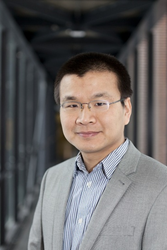
Zhipei Sun
Aalto University
Title: Atomic Engineering for Next-Generation Lasers
Abstract:
Atomic engineering offers a path to compact, versatile light sources by controlling how materials generate, amplify, and transform light. In this talk, I will connect atomic-scale material design with advanced laser capabilities on chips and optical fibres. Examples include atomic-layer deposition of rare-earth gain materials for efficient on-chip amplification and high-performance lasers on silicon-compatible platforms. In nonlinear optics, twisted two-dimensional crystals offer interlayer orientation as a design parameter for phase matching, enabling all-fibre-integrated frequency conversion, photon-pair generation, and ultrafast lasers. Together, these advances link optical gain, pulse generation, and wavelength conversion through atomic design. The broader vision is to achieve capabilities beyond current technologies while making these powerful light sources smaller, easier to manufacture, and widely accessible for precision measurement, optical computing, and quantum technologies.
Biography:
Zhipei Sun is Professor of Photonics at the Department of Electronics and Nanoengineering of Aalto University, Finland. Currently, he is actively involved with the European Research Council advanced grant, European Quantum Flagship, the Research Council of Finland’s Photonics Flagship, and Centres of Excellence on quantum technology and quantum materials. His research interests include nonlinear optics, nanophotonics, and ultrafast photonics.
Plenary Talk 3:
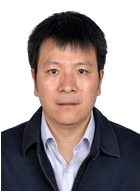
Xiulai Xu
Peking University
Title: Light–Matter Interactions between Low-Dimensional Excitons and Nanophotonic Structures
Abstract:
Low-dimensional semiconductor excitons provide an attractive platform for exploring light–matter interactions owing to their strong oscillator strength, rich internal degrees of freedom, and potential for integration into photonic devices. In this talk, I will present our recent studies of light–matter interactions between low-dimensional excitons and nanophotonic structures, based on plasmonic nanocavities and photonic-crystal platforms.
I will first discuss strong and enhanced light–matter interactions between two-dimensional excitons and plasmonic nanocavities, where deep-subwavelength optical confinement enables large coupling strengths, Purcell enhancement, and chiral control of excitonic emission. I will then introduce our studies of photonic-crystal microcavities and waveguides coupled to quantum emitters. These structures offer high-quality-factor optical confinement, engineered dispersion, and efficient on-chip control of photons and excitons, enabling cavity quantum electrodynamics, chiral light–matter interactions, and topological photonic functionalities. Finally, I will discuss the prospects of integrating low-dimensional excitonic materials with nanophotonic architectures for actively controlled and integrated quantum photonic devices.
Biography:
Xiulai Xu is a Boya distinguished professor in School of Physics, Peking University. He received his PhD from Cavendish Laboratory, University of Cambridge. After that he worked as a senior research scientist in Hitachi Cambridge Laboratory and a professor in Institute of Physics, Chinese Academy of Sciences before moving to Peking University. His research has been mainly focused on the quantum optoelectronic properties of low dimensional semiconductor systems for optical quantum information processing.